
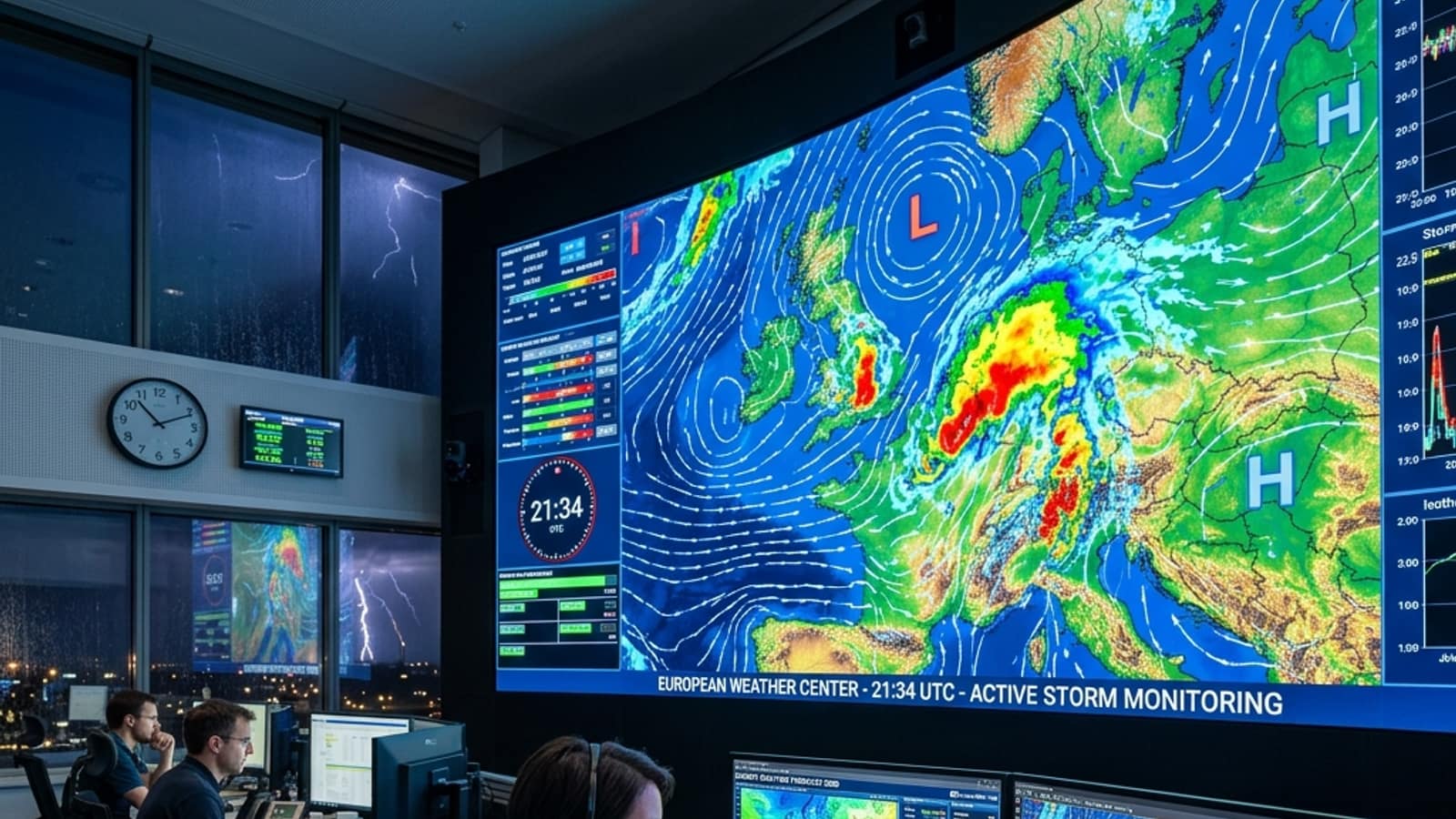
A weather forecast is made by feeding an enormous number of measurements of the atmosphere's current state into computer models that apply the laws of physics and calculate how the weather will change. The further into the future a forecast reaches, the less certain it becomes, because small errors grow with time.
Where does a forecast start?
Everything begins with measuring what is happening in the atmosphere right now. The data comes from several sources:
- Weather stations on the ground measure temperature, pressure, humidity and wind.
- Satellites watch clouds, moisture and temperatures from space.
- Weather balloons rise through the atmosphere and measure conditions at altitude.
- Radars detect precipitation and its intensity.
Together, these millions of measurements produce a snapshot of the atmosphere at a given moment.
How do the models calculate the weather?
That initial snapshot is fed into computer models of the atmosphere. The models divide the atmosphere into a grid of points and apply physical laws at each one: how air moves, how heat is transferred, how moisture condenses into clouds and rain.
Step by step, the model calculates how the state will change over the coming minutes, hours and days. The result is turned into the forecast you see: temperatures, precipitation, wind and symbols for each period.
Why is the forecast sometimes wrong?
The atmosphere is a chaotic system: a small difference in the starting state can, over time, lead to a large difference in the outcome. Since measurements are never perfect, those tiny inaccuracies grow as the model looks further into the future.
That is why:
- Today and tomorrow the forecast is usually quite accurate.
- A few days ahead the uncertainty grows.
- The end of the week and beyond should be read as guidance, not a guarantee.
To deal with this uncertainty, meteorologists often run models many times with small variations and check how much the results agree. The greater the agreement, the greater the confidence in the forecast.
What does "chance of rain" mean?
The chance of rain is a common point of confusion. The number, say 70%, shows how likely it is that rain falls at a given place during the given period. It does not say how much rain will fall or how long it will rain.
So a 30% chance means rain is possible but less likely than not: worth having an umbrella at hand, but no reason to cancel your plans.
Why trust the forecast at all?
Despite the uncertainty, modern forecasts are far better than they used to be, thanks to better measurements and more powerful models. Read correctly, with more confidence for the near days and some reserve for the distant ones, they are a valuable and reliable guide for planning everyday life. To read them more easily, see what the weather symbols mean.