
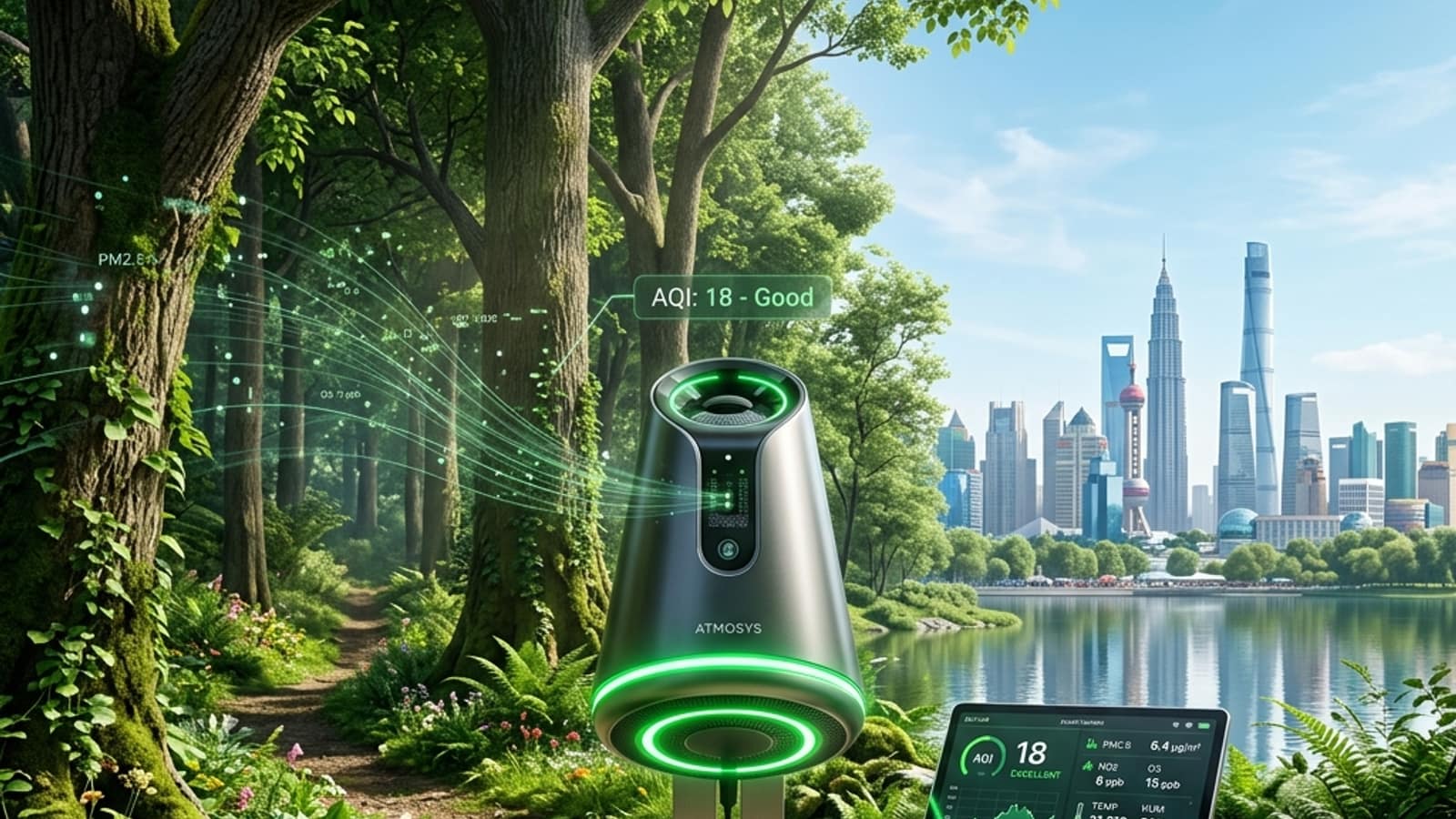
AQI (the air quality index) is a number that shows how clean or polluted the air is right now, paired with a colour: from green for good air to red and darker shades for hazardous. The higher the number, the greater the health risk, especially for sensitive groups.
What is AQI?
AQI means "air quality index". Instead of following several complex measurements of different pollutants, AQI gathers it all into one understandable number and colour. In a few seconds you can judge whether it is safe to go for a run outside or better to stay in.
The index shows the worst value among the tracked pollutants: if just one is high, it sets the overall AQI.
How do you read AQI?
The scale runs from low to high values, with colours that make it easy to interpret:
- Green: good air. Minimal risk; being outdoors is fine.
- Yellow: moderate. The air is acceptable, but highly sensitive people may feel discomfort.
- Orange: unhealthy for sensitive groups. Children, older people and people with respiratory conditions should take care.
- Red: unhealthy for everyone. Anyone may feel effects; limit exertion outdoors.
- Purple and maroon: very unhealthy to hazardous. Serious risk for the whole population; avoid outdoor activity.
The exact numeric thresholds depend on the standard in use, but the logic is always the same: lower and greener is better, higher and redder is worse.
Which pollutants determine AQI?
AQI usually covers a few key pollutants:
- PM2.5 and PM10: fine particles in the air. PM2.5 are especially harmful because they penetrate deep into the lungs.
- Ozone (O₃): linked with hot, sunny days.
- Nitrogen dioxide (NO₂): mostly from traffic.
- Sulphur dioxide (SO₂) and carbon monoxide (CO): from combustion and industry.
In cities like Skopje in winter, the main culprit behind high AQI is usually the fine PM2.5 particles from heating and traffic.
Who should take the most care?
Not everyone reacts to polluted air the same way. More vulnerable are:
- children and older people,
- people with asthma or other respiratory conditions,
- people with heart disease.
These groups can feel effects at lower values than healthy adults, so for them it matters to take care already when the index is in the yellow or orange range.
How to use AQI every day
Check the AQI before outdoor activities, especially in winter. If it is in the green or yellow, you are usually fine. If it climbs into orange or higher, shorten your time outside, keep the windows closed and postpone strenuous exercise. To understand why the number spikes precisely in the cold months, see why Skopje's air is polluted in winter.